
Laparoscopic Surgery in Vijayawada
Advanced Minimally Invasive Surgical Care
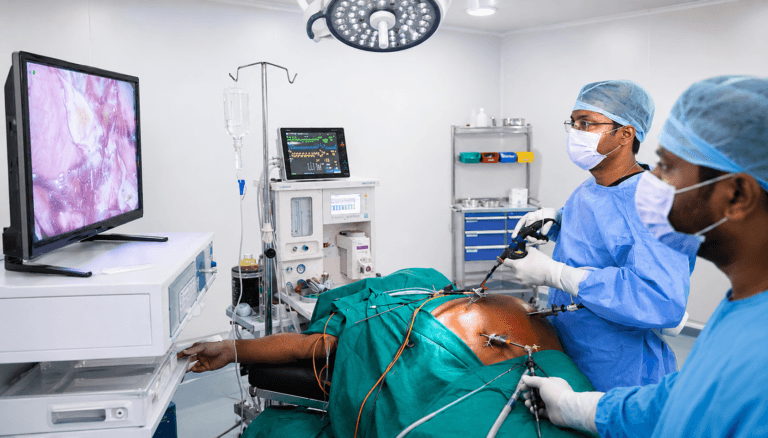
Understanding of Laparoscopic Surgery
Laparoscopic surgery, also known as keyhole surgery, is a modern surgical technique performed through small incisions using a high-definition camera and specialized instruments. It offers a safer, less painful alternative to traditional open surgery and helps patients recover faster.
Conditions Treated with Laparoscopic Surgery
🔷 Gallbladder Stones (Cholecystectomy)
🔷 Hernia Repair
🔷 Appendicitis (Appendectomy)
🔷 Diagnostic Laparoscopy
🔷 Gastrointestinal Conditions
🔷 Selected Emergency Surgical Conditions
Elective and Emergency Laparoscopic Surgery
Laparoscopic surgery is widely used for both planned (elective) and emergency procedures.
Elective Procedures
Gallbladder Surgery (Cholecystectomy)
Hernia Repair
Appendix Surgery (Appendectomy)
Diagnostic Laparoscopy
Gastrointestinal Procedures
Emergency Procedures
Acute Appendicitis
Perforated Ulcers
Bowel Obstruction
Abdominal Infections
Emergency Abdominal Conditions
Benefits of Laparoscopic Surgery
Laparoscopy not only helps diagnose abdominal problems quickly but also allows treatment through the same minimally invasive approach.
✔ Smaller Incisions
✔ Less Post-Operative Pain
✔ Minimal Scarring
✔ Faster Recovery
✔ Shorter Hospital Stay
✔ Lower Risk of Infection
✔ Reduced Blood Loss
✔ Early Return to Daily Activities
✔ Faster Return to Work
✔ Better Cosmetic Results
Frequently Asked Questions
Is laparoscopic surgery safe?
Yes. Laparoscopic surgery is a safe and widely performed procedure with excellent outcomes.
Is laparoscopic surgery painful?
Most patients experience significantly less pain compared to traditional open surgery.
How long does recovery take?
Recovery is generally faster than open surgery and depends on the type of procedure performed.
Will I have a large scar?
No. Only small keyhole incisions are used, resulting in minimal scarring.
When can I return to work?
Most patients can return to normal activities much sooner than after traditional open surgery.
Call for Appointment
+91 97017 83693
Medicare Multispeciality Hospitals
Vishnu Vardhana Rao St,
Suryaraopeta, Governor Peta,
Vijayawada, Andhra Pradesh 520002
Union Hospital
D. No, : 29-4-7,
Kodandarami Reddy St, Governor Peta,
Vijayawada, Andhra Pradesh 520002